Pentiment: A Combat-Free Historical Mystery Told Like a Manuscript
Pentiment from Obsidian Entertainment casts the player as an artist navigating murders and scandals in early 16th-century Bavaria. The experience centers on dialogue-led investigation and branching decisions that ripple across decades, replacing combat with social maneuvering. Visually it draws on illuminated manuscripts while the writing and evidence-gathering drive resolution. The game suits players who favour slow-burn narratives, historical depth, and mystery-solving over action-oriented play.
Pentiment is a narrative mystery built around investigation and social navigation
You play Andreas Maler, a journeyman artist pulled into a string of murders in the Alpine town of Tassing and at Kiersau Abbey; the central loop asks you to question, collect testimony, and make accusations. The developer structured the experience so that dialogue choices and social standing determine outcomes, not combat or character stats. That emphasis makes the core activity reading people and documents, piecing together motives from conversations and local histories.
Investigative mechanics and character decisions shape how cases resolve
The game provides character customization that affects academic and social background, influencing which conversations and insights become available. Investigation sequences require tracking clues and choosing when to press or accuse, and the writing ties earlier decisions to later events. Multiple endings and reactive scenes depend on those choices, so players who catalogue testimony and revisit witnesses gain clearer paths through the mysteries.
The art and score create a period-authentic atmosphere focused on text and tone
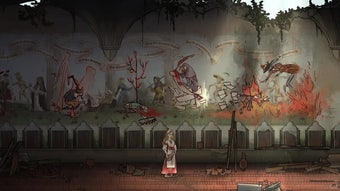
The 2D aesthetic imitates medieval manuscripts and early woodcuts, and the musical score uses period-accurate performance by the Alkemie Early Music Ensemble to reinforce setting. Text presentation shifts calligraphic styles to reflect a character's education and rank, making reading itself a gameplay cue. The presentation turns archives, letters, and parish records into active materials the player consults during investigations.
A deliberate pace rewards attention and offers replay value through branching outcomes
Sessions tend toward thoughtful interrogation rather than instant action; a thorough playthrough typically lasts about 15 to 20 hours. The narrative unfolds across decades, so early judgments carry weight and invite replays to explore alternate resolutions. Players familiar with literary historical mysteries, such as The Name of the Rose, find comparable pleasures here, while fans of Obsidian's previous, combat-focused RPGs encounter a markedly different, conversation-driven design.
In summary: an exacting, story-first pick for patient narrative players
Pentiment is a measured choice for players who enjoy careful deduction, historical texture, and consequences that accumulate over time. It rewards reading, note-taking, and social inference, but it does not cater to those seeking combat or fast action. For anyone prioritizing thoughtful mysteries and character-driven drama, the game presents a distinctive, sustained experience well suited to repeated, attentive play.